
What makes a personalised photo album truly yours?
When we think about a photo album, we usually think about the photographs first.
The people in them. The places. The celebrations. The moments we don’t want to lose.
But the photographs are only one part of an album.
A truly personalised photo album gives you the opportunity to decide how those photographs are printed, how they are experienced, what surrounds them and what the finished album looks and feels like.
It is this freedom to make choices across the album that makes personalisation meaningful.
It starts with the photographs
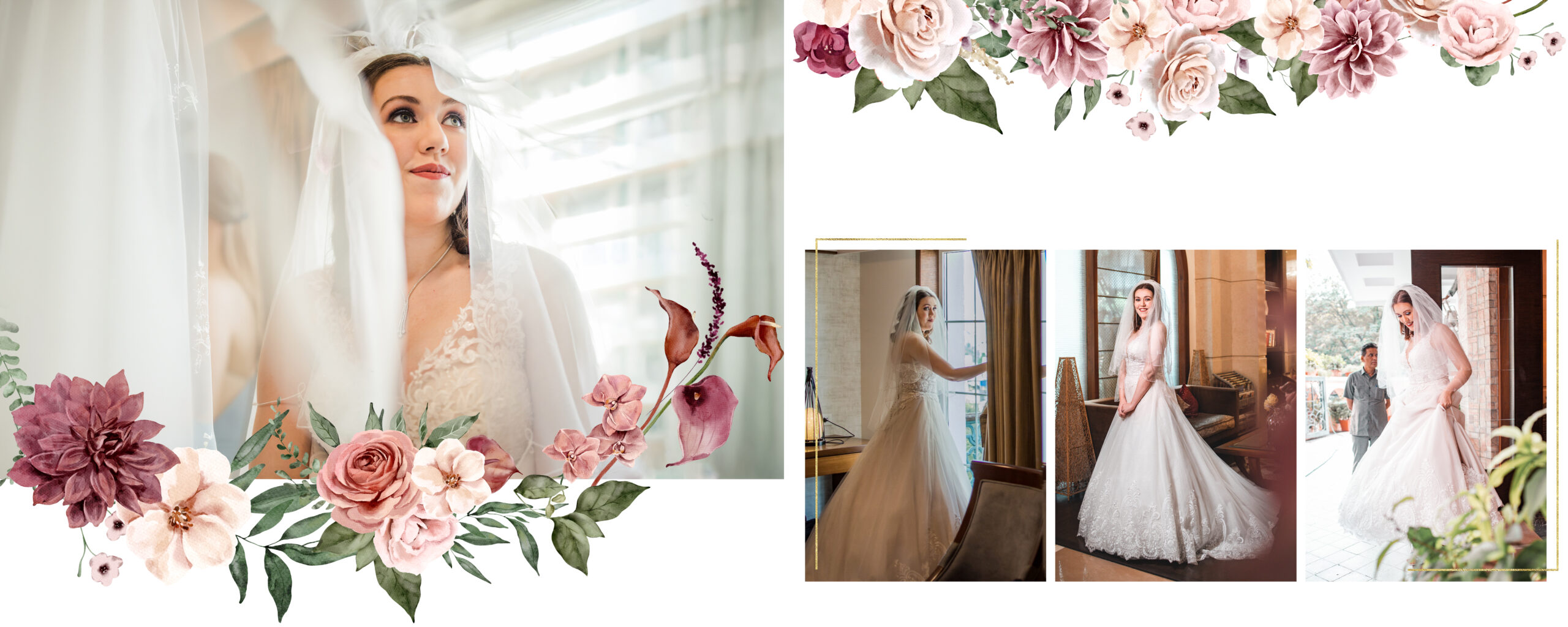
Every album begins with the photographs. You decide which moments belong together, which ones deserve more space and how the story should unfold.
But once those photographs have been selected, another set of choices begins.
How should they be printed? How should the pages feel? Should the album open completely flat? What should the cover look like? Should it carry a name, a date, a photograph or something more understated?
These choices may seem separate, but together they shape the physical experience of the album.
The print changes how the photographs are experienced
The way photographs are printed has a direct impact on how they look and feel when they become part of a finished album.
Photographic printing gives the images the character of professionally produced photographs on photographic paper. Press printing has a different quality and works particularly well when photographs are brought together with typography, design and carefully composed layouts.
The choice is not simply about a printing process. It is about how you want your photographs to live on the page.
That is one of the first ways a personalised photo album begins to become its own object.
Then there is the way it opens
The binding is another part of that experience.
A lay-flat album allows a spread to open across the centre, which can be particularly effective when an image is designed to run across two pages. Panoramic photographs, group photographs and wider compositions can all benefit from having the complete spread available to view.
The way an album opens may not be something you think about when you first see it, but you notice it when you sit down with the album and turn through it.
The construction of the book should work with the photographs, not simply hold them together.
The pages matter too
Paper is often treated as a technical specification. In reality, it is part of the experience of holding an album.
The thickness, texture and finish of the pages influence how the photographs appear and how the album feels as you turn each page.
A wedding album that will be brought out on anniversaries, a travel album that will be revisited years later or a family album that becomes part of a home all have a physical life beyond the photographs themselves.
The pages become part of that life.
The cover is where the album starts to feel like yours
The cover is usually the first thing you notice before opening an album.
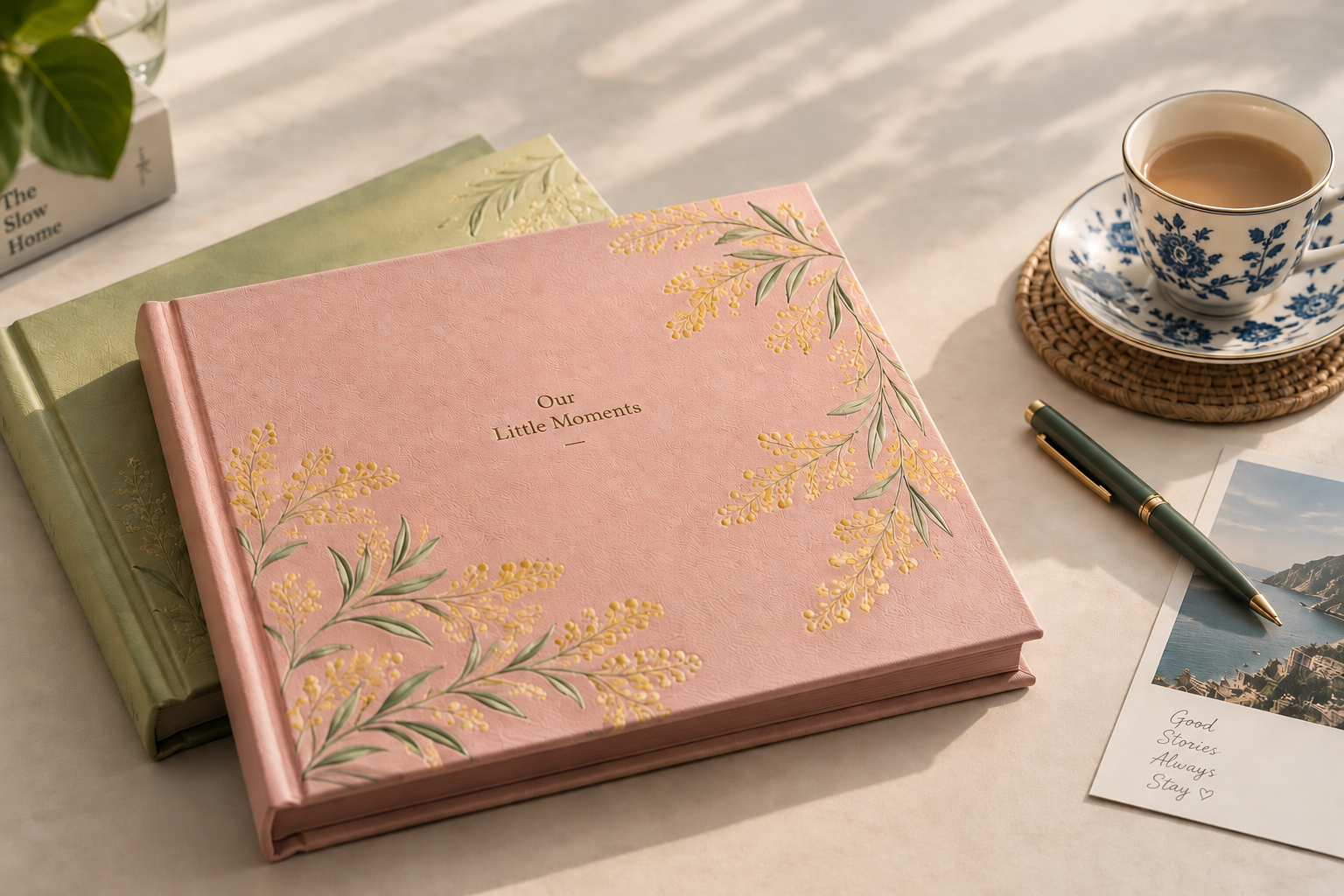
This is where colour, material and texture begin to give the album its own character.
You may prefer a quiet neutral, a rich green, a warm brown, a soft pastel or a deeper shade. You may want something understated or something that makes more of a statement.
There is no universal answer because the point is not to make every album look the same.
It is to give you the freedom to choose what feels right for yours.
Personalisation can be seen and felt
Once the cover is chosen, the details can become even more personal.
Names, initials, dates or titles can be embossed or debossed. Foiling can introduce a metallic detail. An acrylic photo window can make one photograph part of the cover itself.
A metallic name tag can add another physical element, while a wooden engraved nameplate can bring a more tactile and natural quality to the album.
These details do not need to be used simply because they are available.
Sometimes a name quietly embossed on a beautiful cover is enough. Sometimes one photograph says everything. Sometimes an engraved wooden detail becomes the part of the album you remember most.
Good personalisation is not about adding as much as possible.
It is about choosing what belongs.
Even the font has a role to play
Typography is another small decision that can change the character of an personalised photo album.
The same name can feel classic in a serif font, clean and contemporary in a modern typeface or more personal in a script.
Names, initials, dates and titles can each be treated differently depending on the overall look of the album.
It is a small detail, but that is often the nature of personalisation. The things that make an object feel like yours are not always the biggest things.
What will you call it?
An album does not have to be called simply “Wedding Album” or “Family Album.”
It could carry your names.
A date.
A destination.
A phrase that means something to you.
Deepthi & Sujay
Our Wedding
Italy 2025
The Goa Diaries
Our First Home
A Year Together
There is no fixed formula.
A title can be descriptive, personal, playful or almost invisible. And when several albums are created as a collection, titles or dates on the spine can give the collection its own sense of order.
Again, it is a small choice.
But it is yours.
The experience does not end with the album
A personalised photo album can extend beyond the book itself.
The box gives it a place to be stored and presented. The bag becomes part of how it is carried or gifted. Together, they can be designed as part of the same experience.
This matters because an album is not something that exists only for the moment it is delivered.
It is something you keep.
Something that sits on a shelf or inside a cupboard. Something you take out years later. Something that may eventually become part of your family’s collection of things worth holding on to.
How it is kept is part of its story too.
Personalisation does not mean doing everything
With so many choices available, it can be tempting to think that a personalised photo album needs to use every possible treatment.
It doesn’t.
A beautifully personalised photo album may have a simple cover, a name embossed quietly and nothing more.
Another may have an acrylic photograph, metallic lettering and a distinctive colour.
Another may use wood engraving because that material feels more appropriate to the story.
There is no formula.
The value lies in being able to make those choices in the first place and in knowing when to stop.
What makes it truly personal?
The photographs will always be the reason an album exists.
They hold the people, places, celebrations, travels and everyday moments that made the memories worth preserving.
Personalisation adds another layer.
It allows the photographs to become part of an object that has been considered around them from the way they are printed and the paper they sit on, to the way the album opens, the colour and material of the cover, the typography, the name, the finishes and the way the finished piece is presented.
None of these choices changes the memories inside.
They simply allow you to decide how those memories should be held.
And that is what makes a personalised photo album different.
It is not simply a book filled with photographs.
It is a book that has been shaped around the photographs, the story and the person who will keep it.
The photographs tell the story. The choices around them make the album yours.

Vaishali Sahu
Vaishali is a content strategist and writer who moves between the heartfelt and the corporate with equal ease. She writes about the things people want to hold onto, and the way organisations tell the world who they are. Rigorous with research, deliberate with tone, and always looking for the human angle that makes a piece worth reading.
Your memories deserve
a real home.
Handcrafted photo albums designed by humans,
powered by care — not a scroll.