
Your album is already being made, before the wedding even starts
Most people think of the album as the last step. The wedding happens, the photographs come in and then someone sits down and designs a book.
It doesn’t quite work that way.
An album can only hold what was photographed. Your designer can arrange those photographs beautifully but nobody can add a moment that no camera caught. So the real work happens on the day itself and the day is shaped by what your wedding photographer knows before it starts.
That’s why one short conversation matters so much. Ten minutes with your wedding photographer, before the first event, covering what you want and who matters to you.
Here is everything worth saying in it.
Match the camera times
Start here, before anything else. It takes two minutes and it costs you nothing.
Every camera has a clock inside it and every photograph it takes is stamped with that time. The stamp is invisible on the picture itself, but it sits inside the file and it is what puts your whole day in order afterwards.
Picture your entry. Two photographers are covering it, one at the doorway and one further inside and their clocks are eight minutes apart. Later, when every file from every camera is arranged by time, your entry does not stay together. A few frames of you walking in. Then a cousin at the buffet. Then more of you walking in. Then somebody’s uncle mid laugh. Then the rest of your entry. The moment is all there. It is simply scattered across eight minutes of everyone else’s evening and the person designing your album has to rebuild the sequence by eye.
So ask the whole team to set their camera clocks to the same time, down to the second, before the first event begins. All of them, standing together, in one go.
After that, everything sorts itself. Your morning appears in the order it happened. The ceremony reads as one continuous story instead of a set of disconnected pieces. Your day gets told in the order you lived it.
Describe the feeling you’re after
You’ll hear words like candid, traditional and cinematic used a great deal. The difficulty is that these words mean slightly different things to every team you speak to. One photographer’s idea of candid is not the next photographer’s idea of candid.
So instead of naming a style, show one.
Gather three or four photographs you love. They can come from anywhere. A friend’s wedding, something you’ve had saved for two years, anything that made you stop and look. Send them across.
Then add one honest sentence about how you want your album to feel when someone opens it years from now. Warm and full of people. Quiet and a little understated. Bright and loud and completely alive.
That one sentence carries more weight than you’d expect. Remember that an album is built only from what actually gets photographed, so the intention has to exist before the first frame, not after. Once your wedding photographer understands what you’re reaching for, they begin reaching for it alongside you.
Introduce your people
Make a list of the people who matter most. Not every guest. Only the ones you already know you’ll go looking for when you open the album years from now. Parents, siblings, grandparents, the friends who feel like siblings, the aunt who has been present at every milestone of your life.
Hand that list to your wedding photographer. Better still, walk them around and introduce a few of these people in person before the first event begins.
Here is why it helps so much. Your photographer is arriving into a room full of faces they have never seen before. Everyone is a stranger to them. The list turns strangers into people worth following. Five minutes of introductions means that when you open your album, everyone you were thinking of is already inside it, waiting for you.
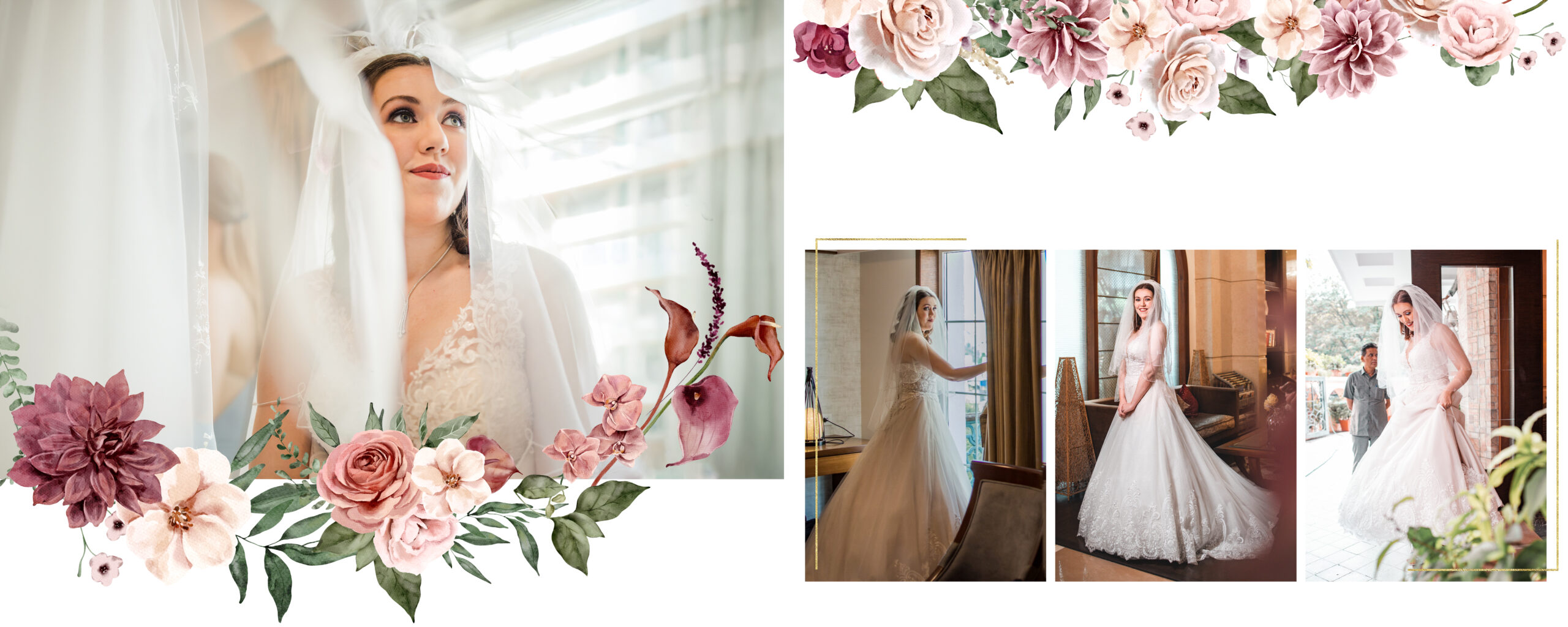
While you’re getting ready, ask the people you love to be in the room with you. Your mother, your sister, your closest friends.
The makeup chair is where the quiet moments happen. Someone adjusting your dupatta. Someone welling up and insisting they aren’t. Someone laughing at a joke that only your family would find funny. These are almost always the frames people linger over the longest and they simply cannot happen if the room is empty.
One more small thing. Mention to your makeup artist in advance that a photographer will be in the room. Makeup artists work in tight spaces and need to move around your face freely. When they know beforehand, they leave a little room for the camera and nobody is working around a surprise.
Ask for the full mix
Ask for both kinds of photographs. Candid and posed.
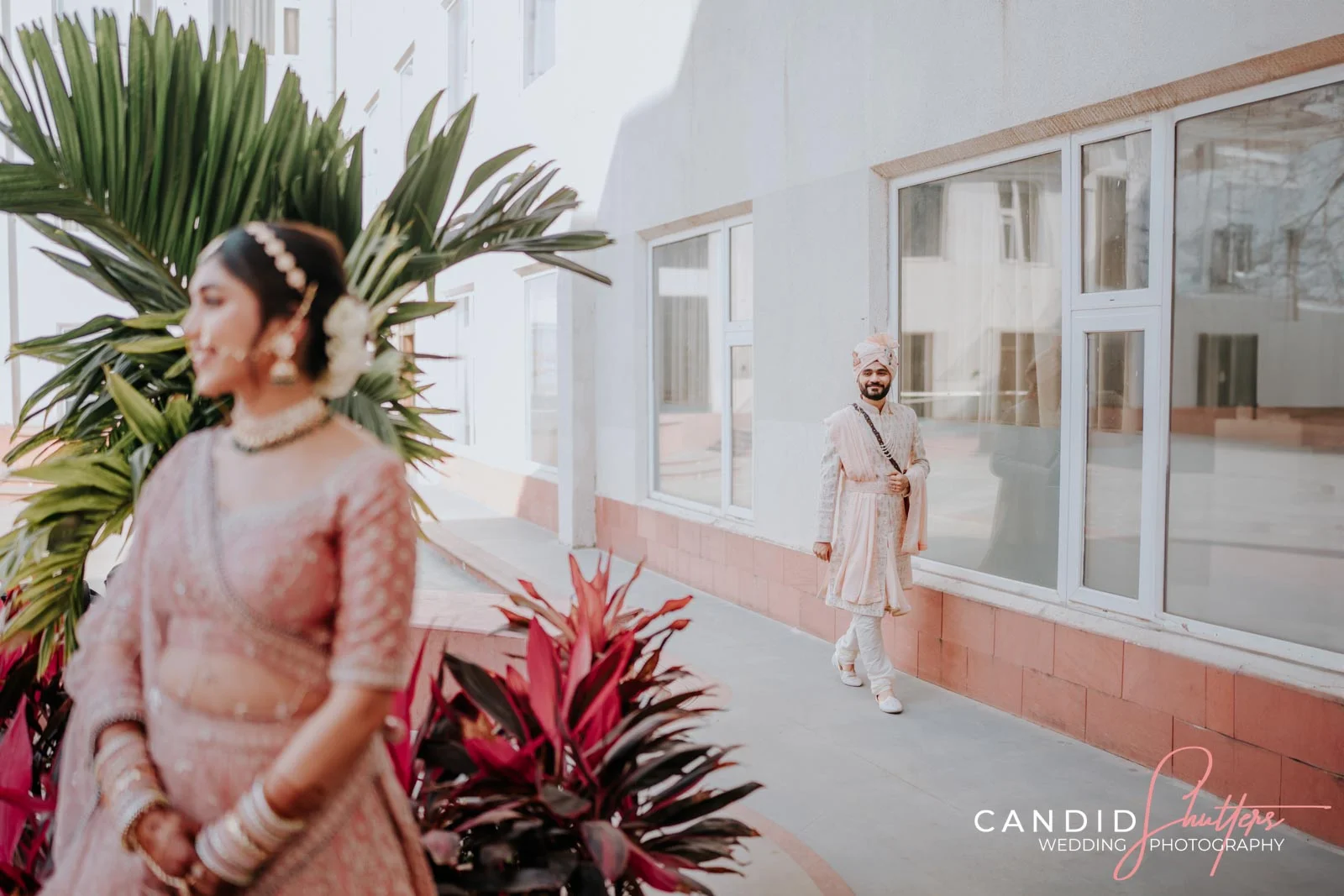
Candid photographs are taken while people are simply being themselves. Nobody is arranged and nobody is looking at the camera. This is where the real expressions live, all the laughter and the half turns and the moments no one realised were being noticed.
Posed photographs are the opposite. People are arranged and looking into the lens and they know the picture is being taken. These matter just as much, because they are your coverage. They are the reason every person you love is definitely accounted for rather than possibly accounted for.
You want both. Candid alone leaves gaps. Posed alone leaves the album feeling formal.
For every outfit you wear, ask for two specific things. Good portraits of the two of you and group photographs with your key family. Every single outfit, without exception. Weddings move quickly and a look that took three hours to assemble may only last through part of an event.
Then two smaller requests that quietly shape how your album looks on the page.
The first is a mix of horizontal and vertical photographs. A wide photograph, held the long way, is called landscape. A tall one is called portrait. Album pages are designed using both together, so when a wedding photographer shoots almost entirely one way, the person designing your album is left with very little to work with. A good balance lets a page breathe.
The second is negative space, which simply means empty room around a person. Sky above them, a wall behind them, floor in front of them. It sounds like wasted space and it is the opposite. Photographs with a little air around them sit calmly on a page and they leave the designer somewhere to place a date, a name, or nothing at all.
Get the group photographs right
Group photographs are the ones that go wrong most often and nearly always for the same three reasons.
Arrangement
Ask your wedding photographer to actually arrange the group rather than photographing whatever shape forms on its own. Heights ordered, spacing even, everyone genuinely looking into the lens rather than at the phone in someone’s hand. Thirty seconds of arranging is the difference between a keepsake and a snapshot.
Focus
A camera can only make one distance perfectly sharp. Everything nearer and further stays sharp within a zone around it and that zone has a name. It is called depth of field and it is controlled mostly by the aperture, the size of the opening the light passes through, written as an f number. A wide opening like f/2 gives you a shallow zone. A narrow opening like f/8 gives you a deep one.
In a row of fifteen relatives, the people at either end are always standing a little further back than anyone notices. At f/2 they go soft while the middle stays crisp.
You don’t need any of these words to ask for it. Saying you want everyone in the row equally sharp, from one end to the other, is enough. If you’d like to be precise, ask for the group photographs at a narrower aperture, somewhere around f/8, so the depth of field covers the whole row.
Blinking
In any group of that size, at least one person blinks at the moment the picture is taken. The answer is burst mode, which means the camera takes several photographs in quick succession from one press of the button rather than a single frame. Out of those, there is almost always one where every pair of eyes is open and that is the frame that reaches your album.
Light and when to ask for it
Overhead sun
Harsh overhead light flatters nobody. When the sun sits directly above, it throws hard shadows underneath eyebrows and noses and everyone squints. Your family will look tired in photographs when they aren’t tired at all.
You don’t need to solve this. Your photographer knows where to find softer light, whether that means shade, an open doorway, or a different time. Just say clearly that softer light is what you’re hoping for.
Backlight
Backlight means the light is behind the person and the camera is facing towards it. That glow behind you at haldi, the late afternoon sun arriving through a doorway, that is some of the most beautiful light of the whole day. The only risk is that when it’s handled carelessly, the face goes dark and the person becomes a shape rather than a person.
So don’t ask anyone to avoid it. Simply say that you want faces to stay clearly visible. Backlight, when it’s intentional, is glorious.
Timing for pictures
Almost nobody thinks about this one and it changes more than any of the others.
Ask for portraits and family photographs at the start of every event, while everyone is still fresh. Hair still set, makeup still immaculate, the dancing still ahead of you. The same photograph taken at the beginning of a night and at the end of a night are two entirely different photographs and only one of them is the one you were imagining.
Then put the list down
Everything is planned. Everything is going to be fine.
The moments that wander away from the plan are usually the ones you’ll be recounting as stories in a few years, so let them wander.
The best frames in any wedding come from people who were genuinely enjoying themselves. Not performing for a camera, not quietly running a checklist in their head. Simply present, laughing at something nobody else caught.
That’s the part no instruction can arrange for you. Enjoy the day. The pages will follow.

Vaishali Sahu
Vaishali is a content strategist and writer who moves between the heartfelt and the corporate with equal ease. She writes about the things people want to hold onto, and the way organisations tell the world who they are. Rigorous with research, deliberate with tone, and always looking for the human angle that makes a piece worth reading.
Your memories deserve
a real home.
Handcrafted photo albums designed by humans,
powered by care — not a scroll.