
Curating photos vs hoarding photos: The emotional difference
Curating photos vs hoarding photos is a distinction most people have never consciously made, yet almost everyone lives on the wrong side of it. The average smartphone today holds somewhere between two thousand and ten thousand photographs. A printed photo album holds fifty, seventy, maybe 100. And here is the thing nobody says out loud: the album wins, every single time.
This is not about minimalism as a philosophy. It is about what the human brain actually does with images when there are too many of them, versus when there are only a few that were chosen with care.
Why 3,000 photos feel like nothing
There is a phenomenon researchers call attention fatigue. When we are exposed to too many stimuli of the same kind, the brain stops processing them individually and begins to blur them together. Your 3,000 phone photos are not a memory library. They are a blur.
You scroll through them occasionally, often by accident, rarely with intention. You may feel a brief flash of recognition when you see a face or a place, but the emotion rarely lands fully. There is always another photo behind it and another behind that. The act of scrolling is designed to prevent you from stopping.
This is not a flaw in you. It is the mathematics of abundance. When everything is saved, nothing is chosen. And when nothing is chosen, nothing truly matters.
What curation actually does
To curate is to make a judgment. This one. Not that one. This moment was worth preserving as a singular thing. That one was not, or was too similar, or was technically fine but emotionally empty.
The act of curation is itself a form of remembering. When you sit down to choose thirty photographs from three hundred, you are not just editing a collection. You are actively re-experiencing the event or the year or the relationship from which those photographs came. You are asking yourself what actually mattered. That question is worth asking.
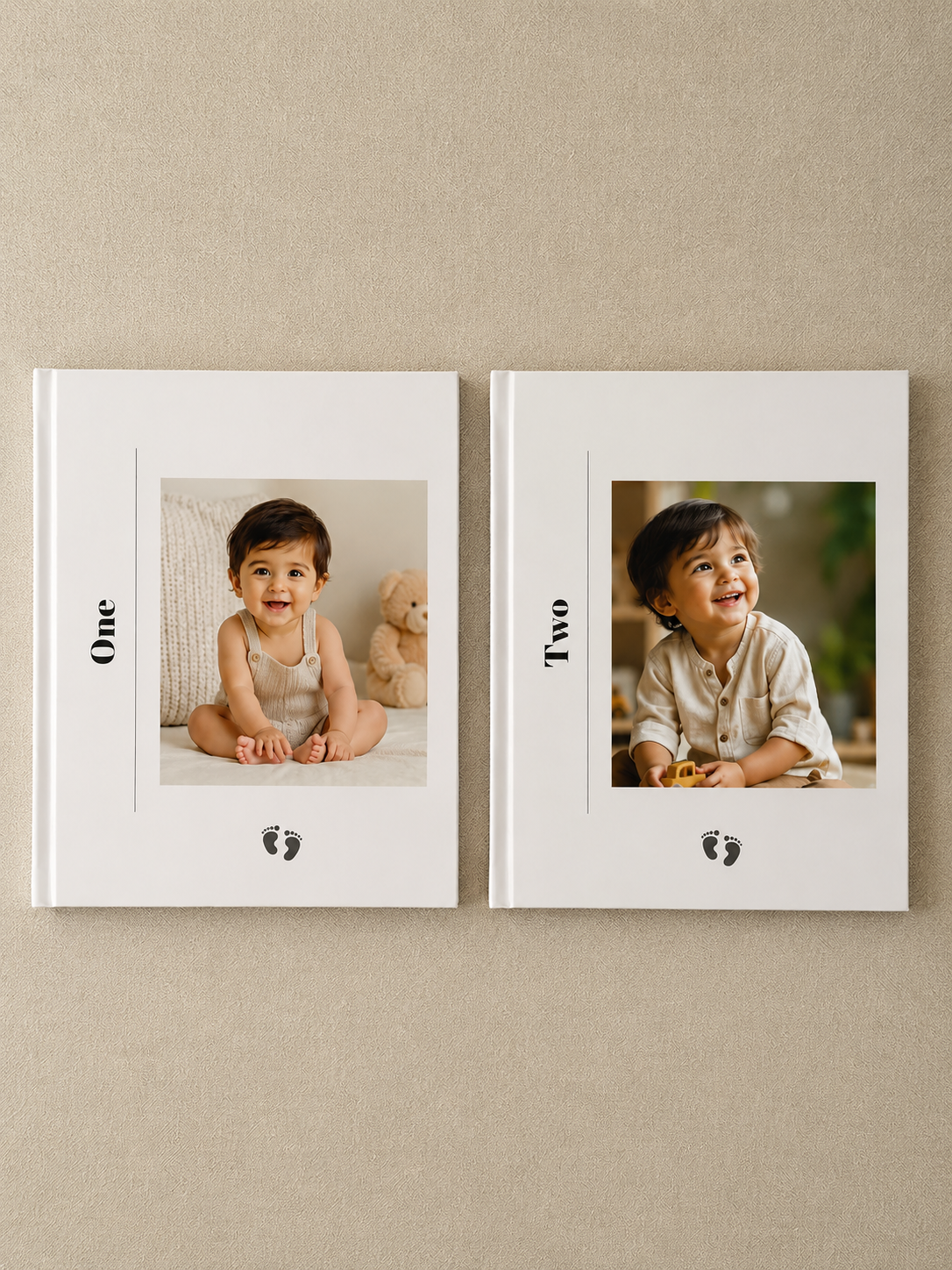
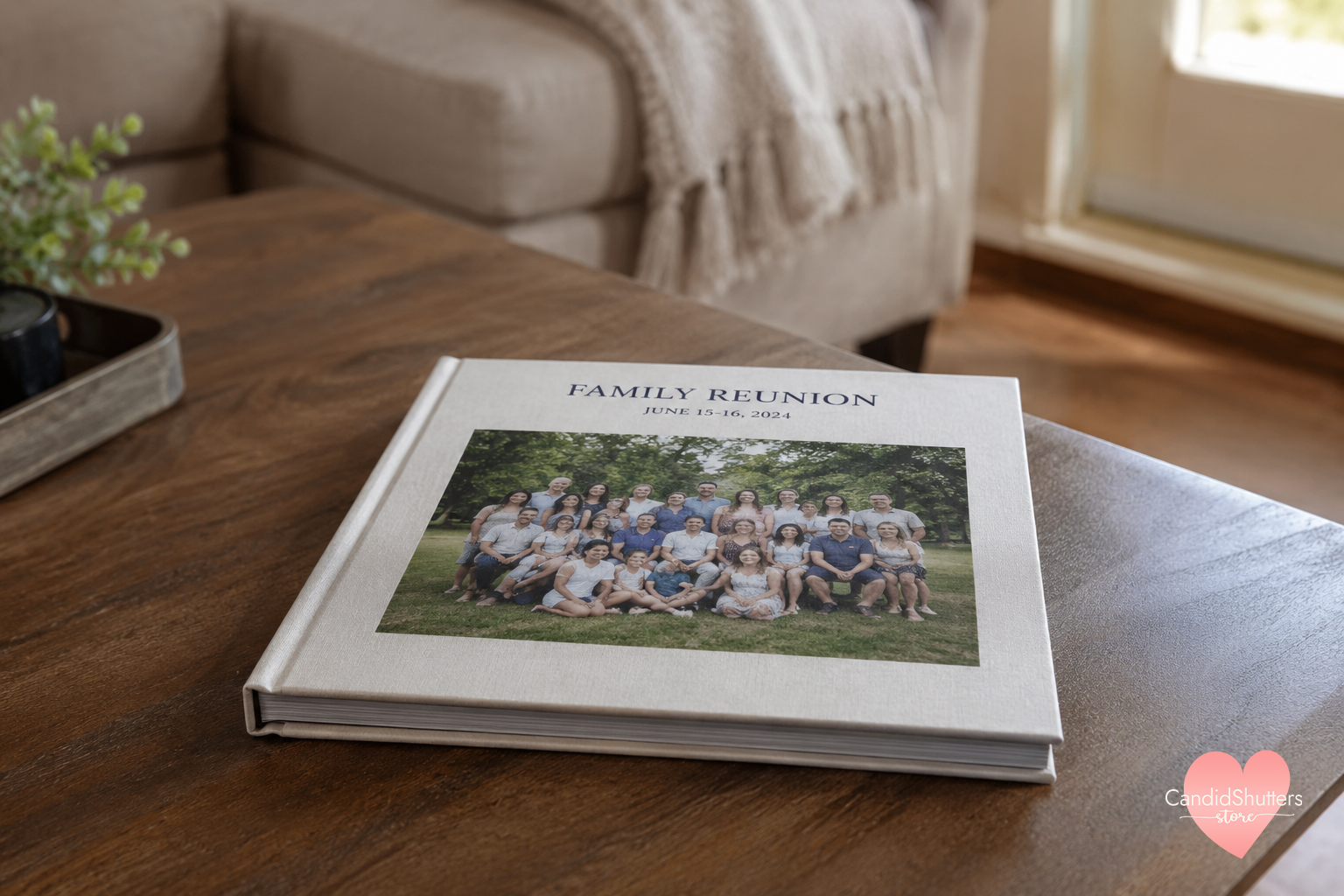
And then, once those thirty photographs exist in a printed album, something further happens. They stop being data and become objects. They develop a physical presence in the world. You can hold them, turn to a page, share them across a table with another person. The story they tell is fixed, curated, intentional. It belongs to someone.
The hidden cost of keeping everything
Hoarding photographs has a cost that is rarely discussed. It is not a financial cost or a storage cost. It is an emotional one.
When you keep everything, you are implicitly saying that you have not decided yet. That the wedding is still being processed. That the trip is not yet a memory, just a folder. The unfinished quality of a disorganised photo library creates a low-level psychological weight that many people carry without naming it.
There is also the risk of loss. Hard drives fail. Phones get lost or stolen. Cloud services change their terms. The photographs that matter most to you are often spread across four platforms and a device that is two software updates away from being incompatible with your current operating system. Abundance creates fragility.
Fifty photographs in a printed album
A printed photo album is a finished thing. It has a beginning and an end. It lives on a shelf, which means it exists in physical space, in the room where you live, where guests can see it, where children can pick it up, where you can reach for it on an ordinary Wednesday evening.
The photographs in it were chosen. That choice is visible. When someone opens your album and sees thirty images from a trip or a year or a childhood, they are not looking at everything that happened. They are looking at what you decided was worth remembering. That is a more intimate thing to share than a phone screen full of every meal you photographed.
Curation is an act of love, in the end. Love for the people in the photographs. Love for the moments that deserve to be more than a file. Love for your future self, who will one day want to remember and will need the photographs to be somewhere they can actually find them.
Curating photos vs hoarding photos: How to begin
You do not need to curate everything at once. Begin with one event. A birthday, a trip, a holiday. Go through every photograph from that event and choose the ones that, if you could only keep ten, you would keep. Then choose a few more. Print them. Put them in a photobook.
That photobook will not feel like a small thing. It will feel like the event finally happened, because someone decided it was worth remembering properly.
Curating photos vs hoarding photos is ultimately a question about what kind of relationship you want to have with your own past. A photobook from CandidShutters Store is where that intention takes a permanent form.

Vaishali Sahu
Vaishali is a content strategist and writer who moves between the heartfelt and the corporate with equal ease. She writes about the things people want to hold onto, and the way organisations tell the world who they are. Rigorous with research, deliberate with tone, and always looking for the human angle that makes a piece worth reading.
Your memories deserve
a real home.
Handcrafted photo albums designed by humans,
powered by care — not a scroll.